

IAT Unveils Domain-Fusion XCU Controller: Breaking Cross-Domain Barriers to Power Intelligent Vehicles
Source: Author: Date:2026-02-10 Read:868
Driven by the dual momentum of China’s Dual-carbon goals and the accelerating wave of automotive intelligence, the evolution toward centralized electronic and electrical (E/E) architectures has become inevitable. Seizing this opportunity for industry transformation, IAT Automobile Technology Co., Ltd., leveraging its dual-engine strategy of “top-tier technical services + core component development,” has recently launched its innovative domain-fusion XCU controller.
The XCU controller pioneers deep integration between the intelligent vehicle control domain and the intelligent cockpit domain, fundamentally addressing the long-standing “data walls” and “control walls” inherent in traditional distributed architectures. By enabling efficient cross-domain data sharing and coordinated control, the solution significantly enhances system synergy. Guided by the core design philosophy of localization, high integration, and exceptional cost efficiency, the XCU not only improves vehicle intelligence and development efficiency, but also delivers tangible benefits to OEMs in terms of supply chain security and cost optimization. The controller has already secured a program nomination from a leading OEM, marking a critical milestone for IAT in translating technological innovation into commercial success within the field of intelligent vehicle core control systems.
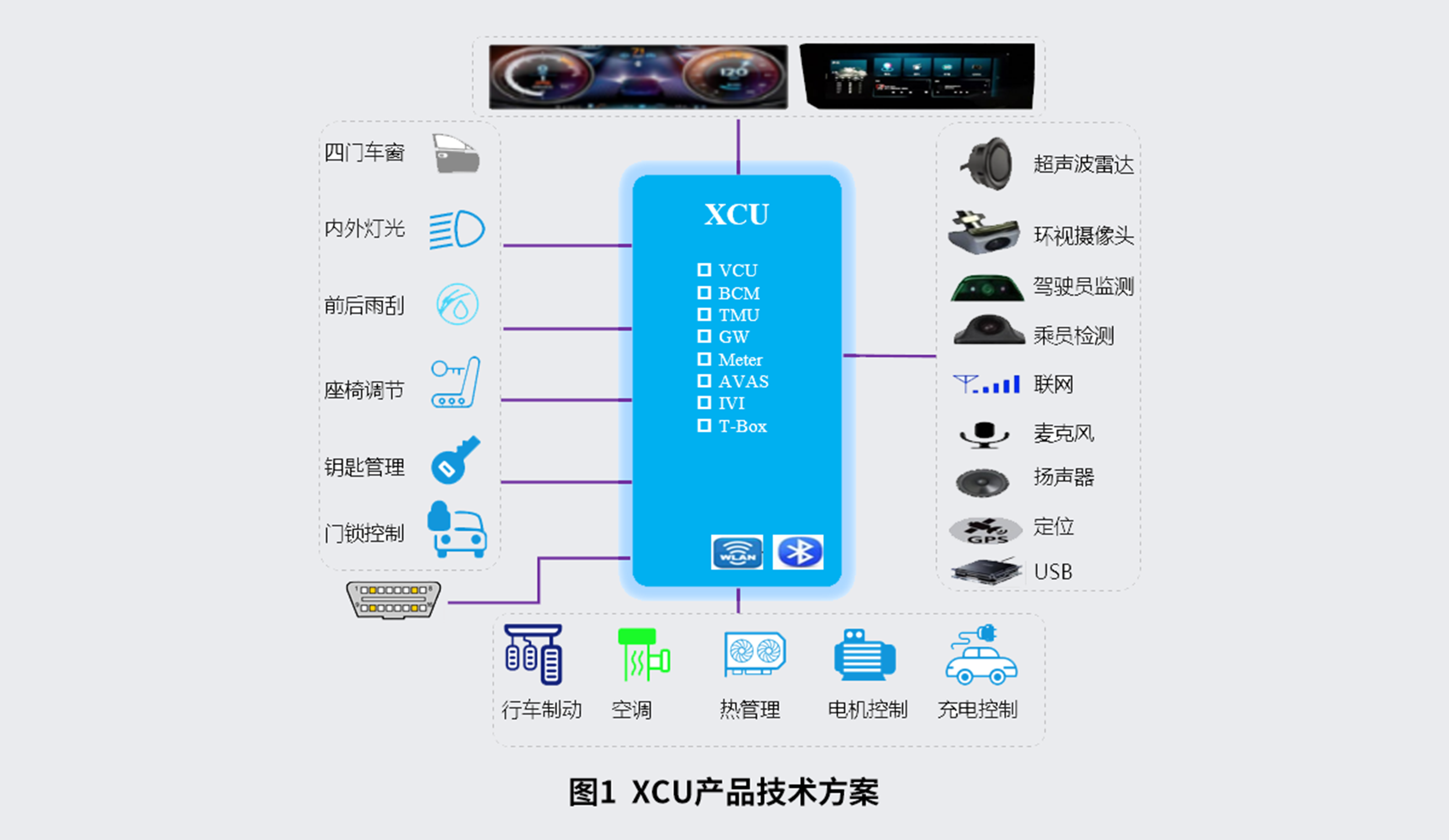
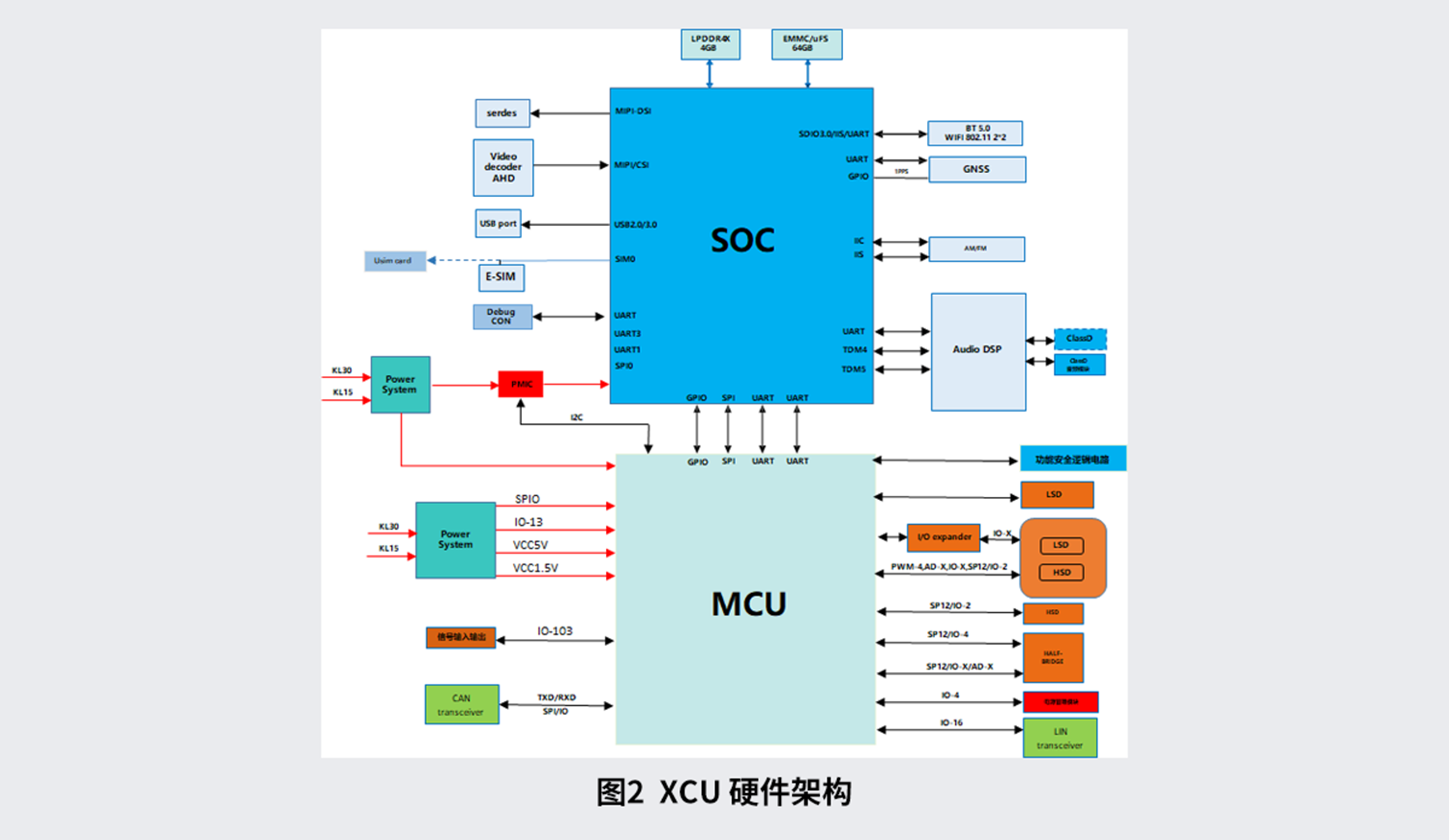
The IAT XCU is built around domestically developed chips, with localization exceeding 90% for key components. It features an innovative “8-in-1” hardware architecture, integrating eight core modules into a single controller:
Vehicle Control Unit (VCU), Body Control Module (BCM), Thermal Management Unit (TMU), Gateway (GW), Instrument Cluster (Meter), Acoustic Vehicle Alerting System (AVAS), In-Vehicle Infotainment (IVI), and Telematics Control Unit (T-Box). Compared with conventional distributed architectures, the system reduces the number of core ECUs by seven units and lowers hardware costs by nearly RMB 1,000. While achieving high-level integration and cost optimization, it also significantly improves system reliability and manufacturing efficiency.
The IAT XCU adopts an innovative heterogeneous architecture combining M-cores and A-cores, deeply integrating a real-time control microcontroller (MCU) with a high-performance system-on-chip (SoC) within a single controller.
The SoC, serving as the primary computing engine, is based on a multi-core, high-frequency design with large cache capacity and support for a Memory Management Unit (MMU). It is optimized for handling open, non-real-time and computation-intensive tasks such as intelligent cockpit and infotainment systems, delivering robust intelligent computing capabilities. Built upon the SoC platform, the system achieves underlying heterogeneity and dual-system isolation, enabling second-level cold boot for the instrument cluster while enhancing functional safety, fast startup, redundancy, and real-time processing performance.
Working in close coordination, the MCU acts as the high-reliability real-time control and safety core. With hard real-time responsiveness, it handles critical tasks including vehicle CAN/CAN FD communication and precise power management. As an independent safety monitoring unit, it continuously safeguards the operation of the SoC and the overall system.
Through the architectural division of responsibilities —“A-core for performance, M-core for safety”— and high-speed on-chip interconnects, the solution achieves an organic integration of high-performance computing and high-reliability control at the hardware level, laying a solid foundation for cross-domain fusion controllers with both strong computing power and functional safety.
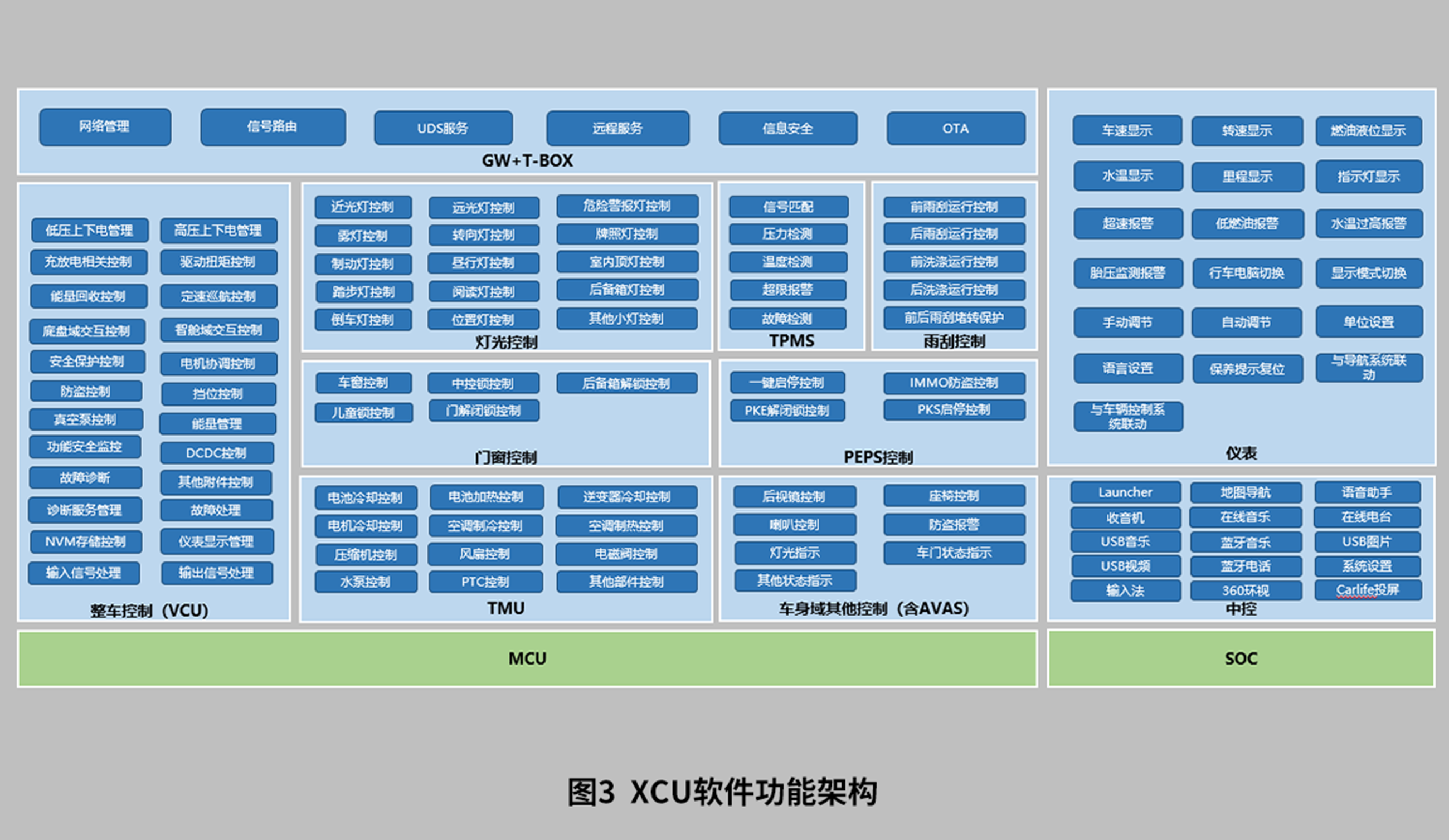
At the application layer, the IAT XCU follows a full-stack self-developed software strategy, integrating comprehensive cross-domain functions including the central gateway, vehicle control, body control, thermal management, central control, AVAS, instrument display, and remote control. The system contains over 100 independently designed Software Components (SWCs). Based on highly mature models, the software architecture achieves hardware–software decoupling, enabling efficient algorithm iteration and agile function deployment. This provides core momentum for building competitive advantages in the era of software-defined vehicles (SDV).
Through deep integration of the hardware–software architecture with five key technologies—inter-core communication, SOA, storage security, communication security, and OTA—the XCU achieves a high level of integration and performance breakthrough. At the hardware level, the system adopts a domestic multi-core SoC, heterogeneously integrating CPU, GPU, NPU, and a 5G modem. Inter-core communication enables efficient multi-core collaboration, supporting the parallel operation of cockpit infotainment and vehicle control systems. The integration of Gigabit Ethernet and CAN FD interfaces further reduces system complexity. Through an SOA architecture, system functions are modularized into more than 200 atomic services, supporting dynamic scheduling and scenario-based function combinations.
In terms of security and upgradability, the product integrates storage security and communication security technologies, establishing an end-to-end protection framework from hardware isolation to encrypted data transmission, fully meeting functional safety and localization requirements. The OTA solution supports delta-level updates, significantly reducing update time and data volume, while enabling independent updates for individual domains. This allows millisecond-level, imperceptible refresh of the power domain and continuously accelerates functional iteration.
By delivering simultaneous improvements in cost efficiency and performance, along with dual assurance in materials and technologies, the XCU is expected to generate substantial cost benefits for OEMs while also creating significant economic value for IAT. The product is projected to generate nearly RMB 100 million in economic returns within 1–2 years, rising to RMB 500 million to 1 billion over 3–5 years. More importantly, the XCU will help advance China’s automotive industry from “import substitution” to “technology leadership.” By breaking long-standing reliance on imported high-end controllers, it contributes to building an independent and controllable supply chain, enhancing industrial resilience and responsiveness, promoting indigenous innovation in core technologies and providing strong support for China’s intelligent vehicles to move up the global value chain. Looking ahead, IAT looks forward to close collaboration with OEM partners to jointly advance the democratization of intelligent vehicle technologies, bringing technology and automobiles together with purpose and care.

News
Copyright © 2021 IAT Automobile Technology Co., Ltd. 京公网安备11011502038290号 京ICP备05037845号